 SPIKED
Field test
The Light Animals Can't See: Why Your Headlamp Needs a Red Mode
The verdict
A headlamp with a red mode isn't a nice-to-have — it's the difference between moving invisibly and announcing yourself to every animal on the mountain. We run PEAX lamps: red is proven, green is under test.
The coyote that stared into the light
Here’s the moment that made me a believer. Calling coyotes at night, bright red spotlight in hand. A coyote comes in — not to fifty yards, not to twenty — right into my lap, with that red beam shining directly in his face the whole way. I turned it off and on. Rode the light right on him. He never flinched. Never looked at it. As far as his eyes were concerned, nothing was there.
I’ve walked in on deer in the dark the same way — red beam square in their faces while they duck their heads and strain to figure out what they’re hearing. They can’t. They can hear something, but the light that’s lighting them up simply doesn’t exist for them.
And my favorite test subjects: my own dogs. Pitch black, red light on, and these dogs — who spend their lives finding me — hop, sniff, circle, and search while I stand there quietly blasting them with a beam they can’t use, giggling to myself. They have no idea where I am.
So no, a headlamp is not just a headlamp. If you’re hunting, the red mode is the whole point.
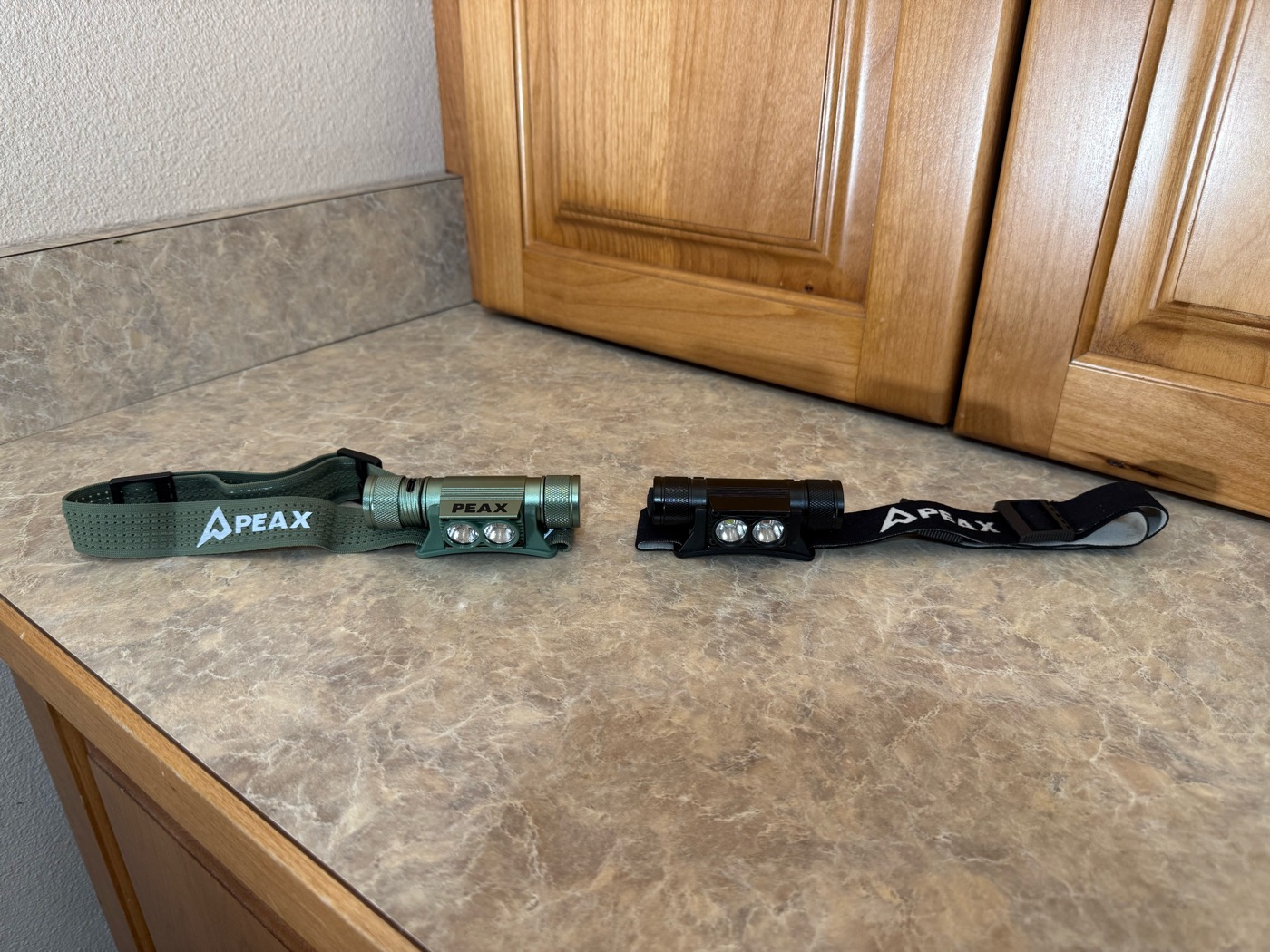 The test fleet: PEAX’s green version (left) and red version (right). Two lamps, three batteries — more on that below.
The actual science (not campfire talk)
This isn’t mystery or luck — it’s cone cells. Humans are trichromats: we carry red, green, and blue-sensitive cones. Deer, elk, and other ungulates are dichromats — they have blue-sensitive and green-sensitive cones, and no red cone at all. Light up at the red end of the spectrum and their eyes barely register it: red reads to them as a dim gray smudge, if it reads at all. Dogs and coyotes are built the same way — dichromatic, blue-and-yellow vision, effectively blind to red as red.
The trade-off is that what’s invisible to them is also dim to you. Red light to a human eye is flat and dull — you lose detail and depth. That’s the price of stealth, and it’s worth paying on the walk-in.
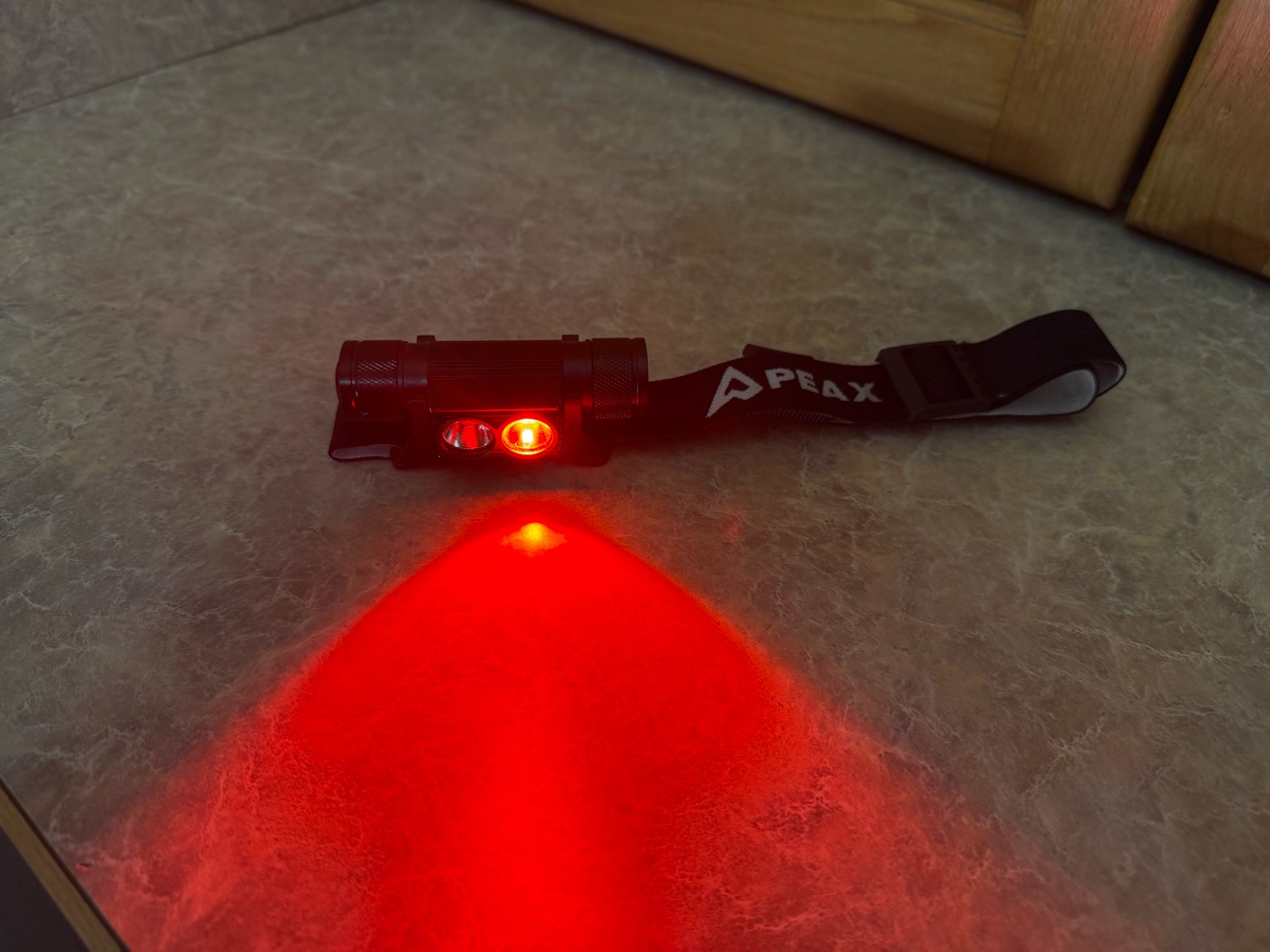 What the approach looks like: dim to you, essentially nothing to a deer.
Red vs green: the test in progress
PEAX makes their headlamp in a red version and a green version, and green is the interesting one. To the human eye green reads almost like white — bright, detailed, easy to work under. And because ungulate eyes are least sensitive at the far red end and only moderately sensitive in green, green is supposed to buy you most of the stealth with much better visibility.
How we actually run them: around camp, my fiancée has the green one cranked up while we’re getting ready — it’s simply better light to function under. Once we’re hiking in, the red comes on, or we swap and she takes the red. Camp is a green job; the approach is a red job.
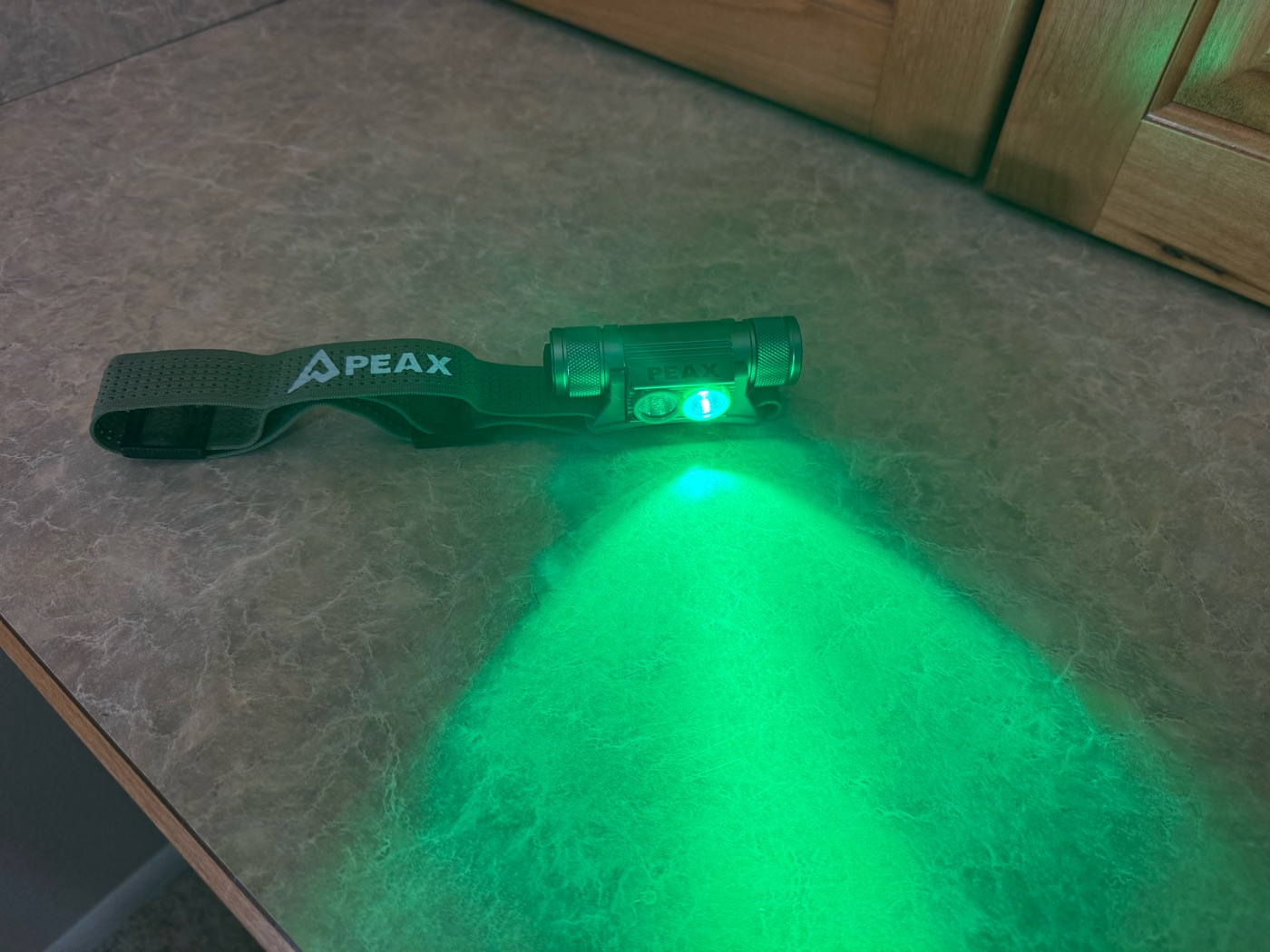 The green version at work — noticeably brighter and more detailed to the human eye than red.
Is green truly as stealthy as red on pressured animals? That’s exactly the kind of claim we don’t repeat until we’ve lived it. One season isn’t enough to know. The green lamp is in the test rotation now — we’ll report back when we’ve got real nights behind it.
The bug secret nobody mentions
Here’s the bonus nobody puts on the box: bugs largely ignore red light. I’ve run a two-color lamp side by side — flip on the white beam and the swarm finds your face in minutes; flip to red and they lose interest. It’s real, and it tracks with the science: most insects orient to ultraviolet and blue-white light, the exact thing your bright white beam is pumping out. Red sits at the far end of the spectrum they care least about.
On a July scouting trip, that trick alone might be worth the price of the lamp.
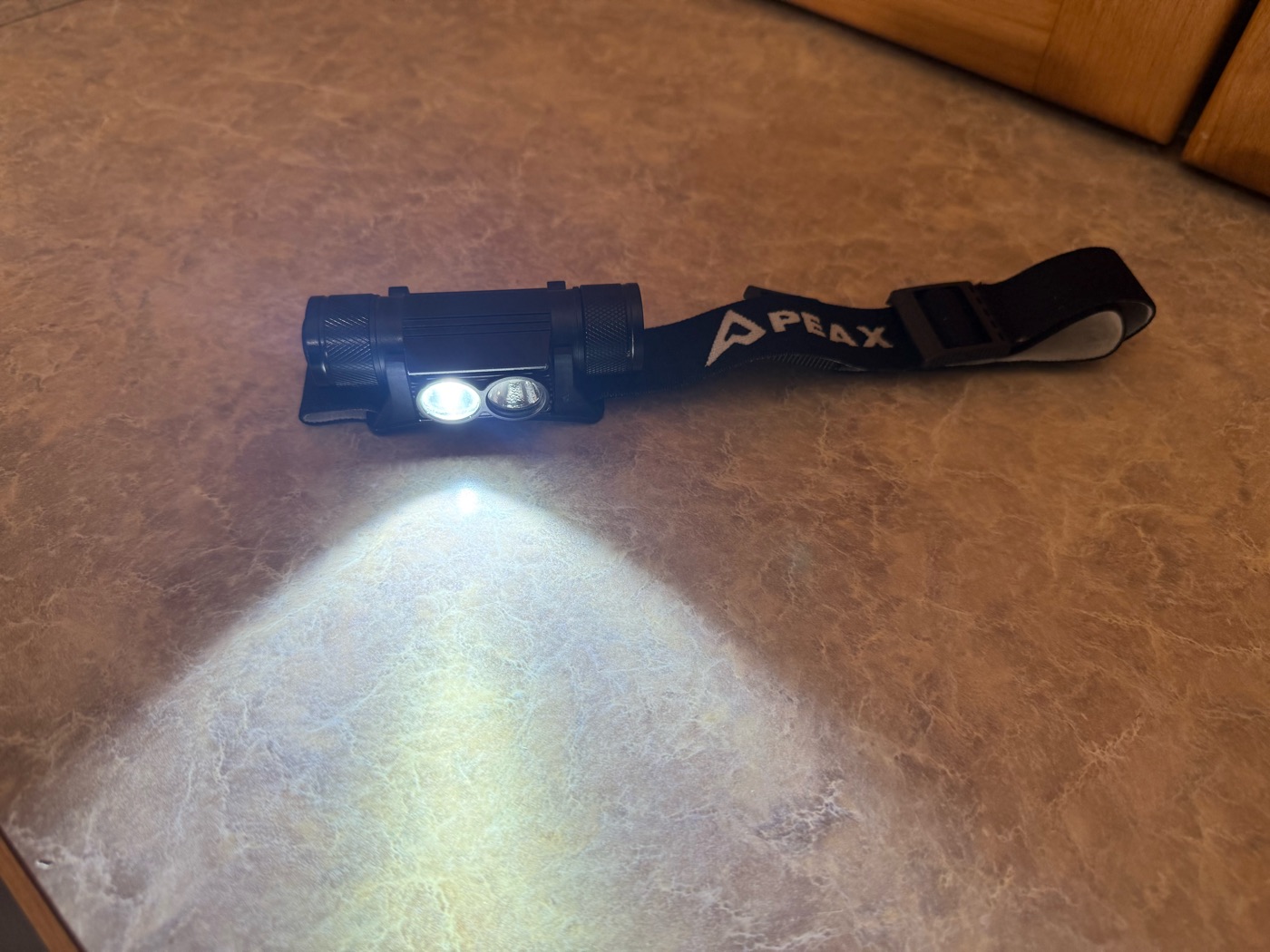 Same lamp, white mode: great for blood trails and camp chores — and a dinner bell for every bug in the county.
Battery doctrine
A headlamp you can’t turn on is trail mix with a strap. The PEAX is rechargeable, which is great — and rechargeable-only is a trap if you run one battery. So: I bought a spare battery, then a second lamp. That’s two lamps and three batteries between us, and the “backup light” line on our day-pack checklist stops being theoretical. Batteries die in the dark, not at the trailhead — plan like it.
Verdict
Get a headlamp with a real red mode — not as a feature on the spec sheet, but as the mode you actually hike in with. The science is settled: deer, elk, coyotes, and dogs are dichromats that essentially can’t see red light, and my coyote will testify. We run the PEAX headlamps and recommend them without hesitation: red is proven on real animals at stupid-close range, green is the promising newcomer under test, and either one beats announcing yourself to the mountain in white.
FAQ
Can deer really not see red light? Not the way you do. Deer are dichromats — blue and green cones only, no red cone. Red light lands on their eyes as something between dim gray and nothing. They can still hear you and smell you, so red light isn’t an invisibility cloak — it just takes their best sense off the table at night.
Is green as good as red? For your eyes, green is far better — nearly white-bright, real detail. For stealth, the science says animals are somewhat more sensitive to green than red, but far less than to white. Whether that difference matters on real animals is what we’re testing now. Until then: red for the approach, green for camp chores.
Does red light really keep bugs away? It doesn’t repel them — it just doesn’t call them in. Insects orient to UV and blue-white light. A white beam is a dinner bell; a red beam is background noise. Side by side on the same lamp, the difference is obvious in one evening.
What about white mode? Still useful — blood trailing, deboning, finding the truck. The point isn’t that white is bad; it’s that white should be a choice, not your only option.
Got a question we didn’t cover — or a lamp you want put through a real season? Email questions@spikedadrenaline.com — we answer every one ourselves. That’s the whole point of this site.
Reader-funded
Keep the tests coming
No sponsors. No ads. No affiliate strings — yet. Every review here is bought with our own money and tested on our own miles. If one saved you from an expensive mistake — or talked you into the right one — the tip jar keeps the next field test funded.
Fuel the next field test ☕Newsletter
More verdicts like this
Join the list and get every new field test the day it publishes.